 ®




















wetBLOC operating principle & scientific basis
1. Scientific basis
wetBLOC was developed through scientific research at a renowned institute in Germany and is grounded in polymer technology and building physics. Its operating principle uses the physical laws of capillary action and polymer technology processes for structural integration into mineral pore systems.
Effectiveness has been demonstrated in building physics investigations and through long-term use under real conditions. Reference projects demonstrate successful application for more than 20 years.
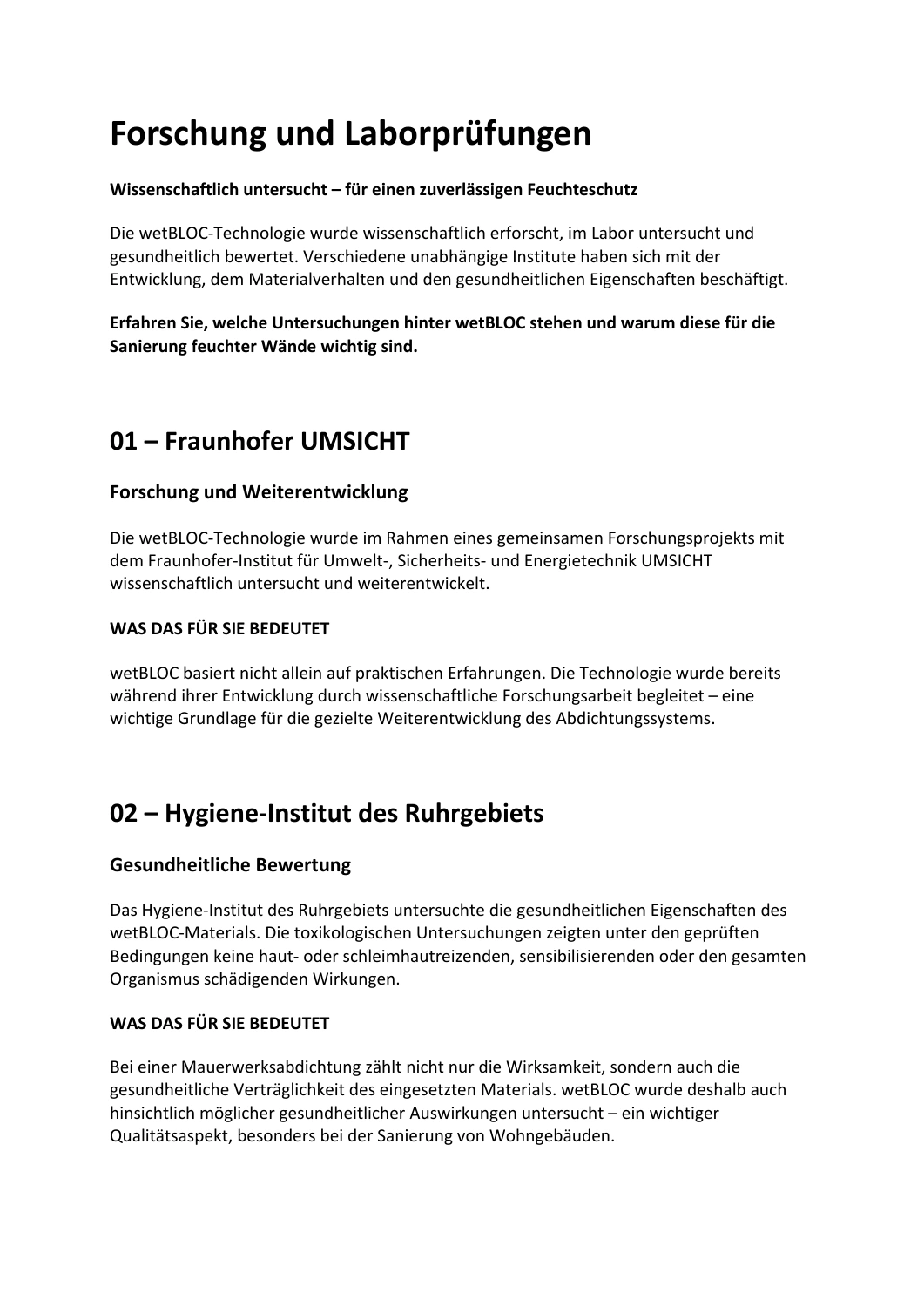
The sealing material formed in the masonry was also assessed by a German institute for environmental hygiene and toxicology from the perspectives of hygiene, toxicology and building toxicology. The assessment found it to be a water-insoluble, inert and non-toxic substance whose use raises no concerns from a health or building toxicology perspective.
How wetBLOC works
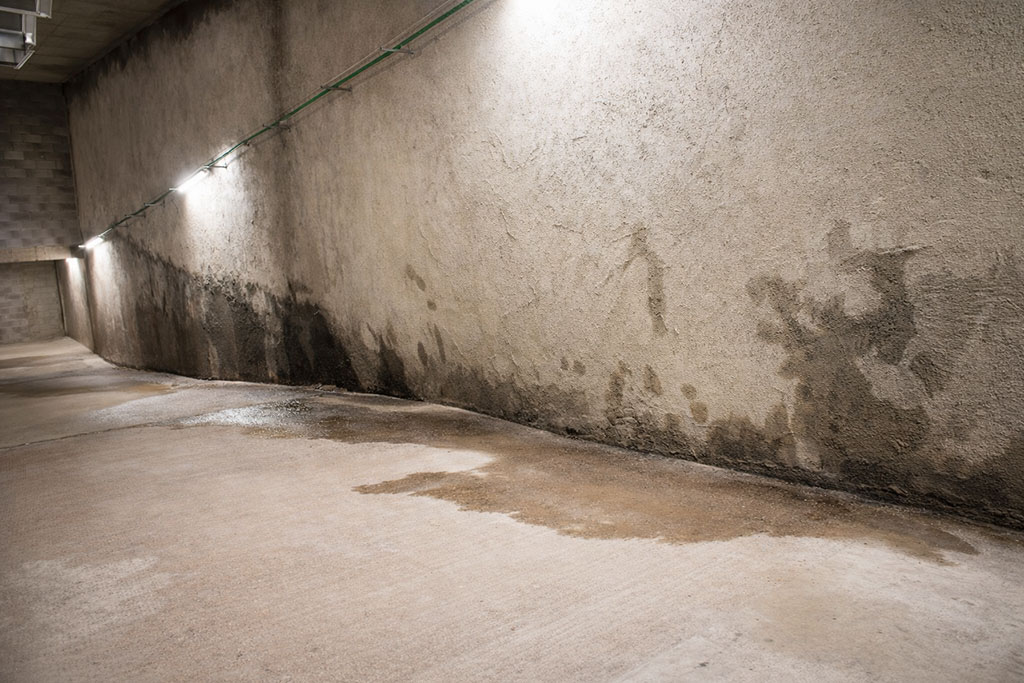
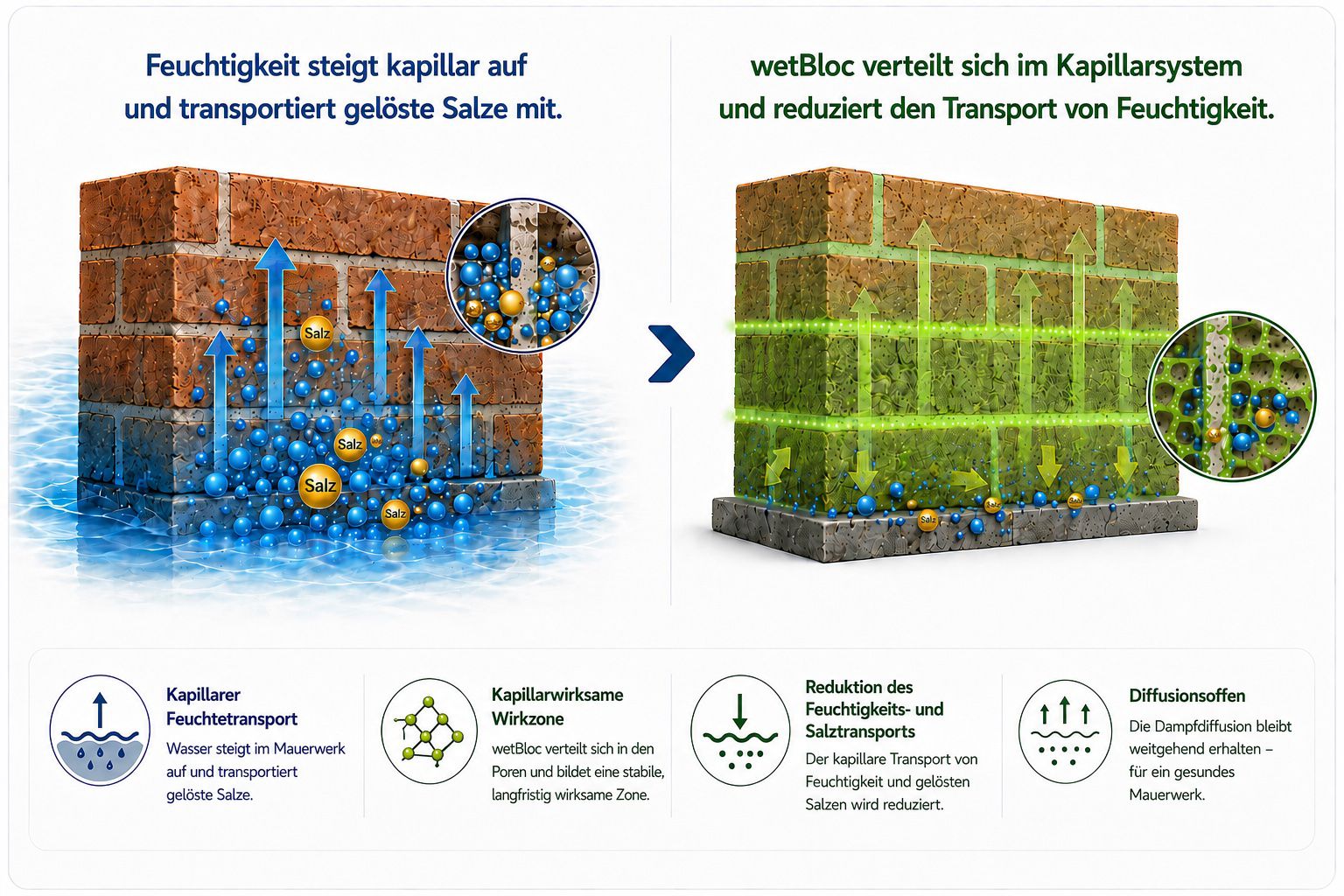
wetBLOC acts directly in the masonry's capillary system – where rising damp is physically transported. After application, the polymer-active components spread within the damp pore and capillary system and react there in a controlled manner to form a structurally integrated waterproofing zone.
This integrated structure interrupts the capillary transport mechanism for water and dissolved salts without substantially impairing water vapour diffusion. This creates the basis for lasting drying and long-term protection of the building fabric.
2. Physical basis
Capillary moisture transport
Mineral building materials such as brick, mortar and natural stone contain a network of fine pores and capillaries. These act as microscopic transport channels through which capillary forces can draw water upwards against gravity.
Dissolved salts are transported along with the moisture. Over time, this leads to saturation, salt contamination and damage to the building material and surface.
Distribution and structural integration in the capillary system
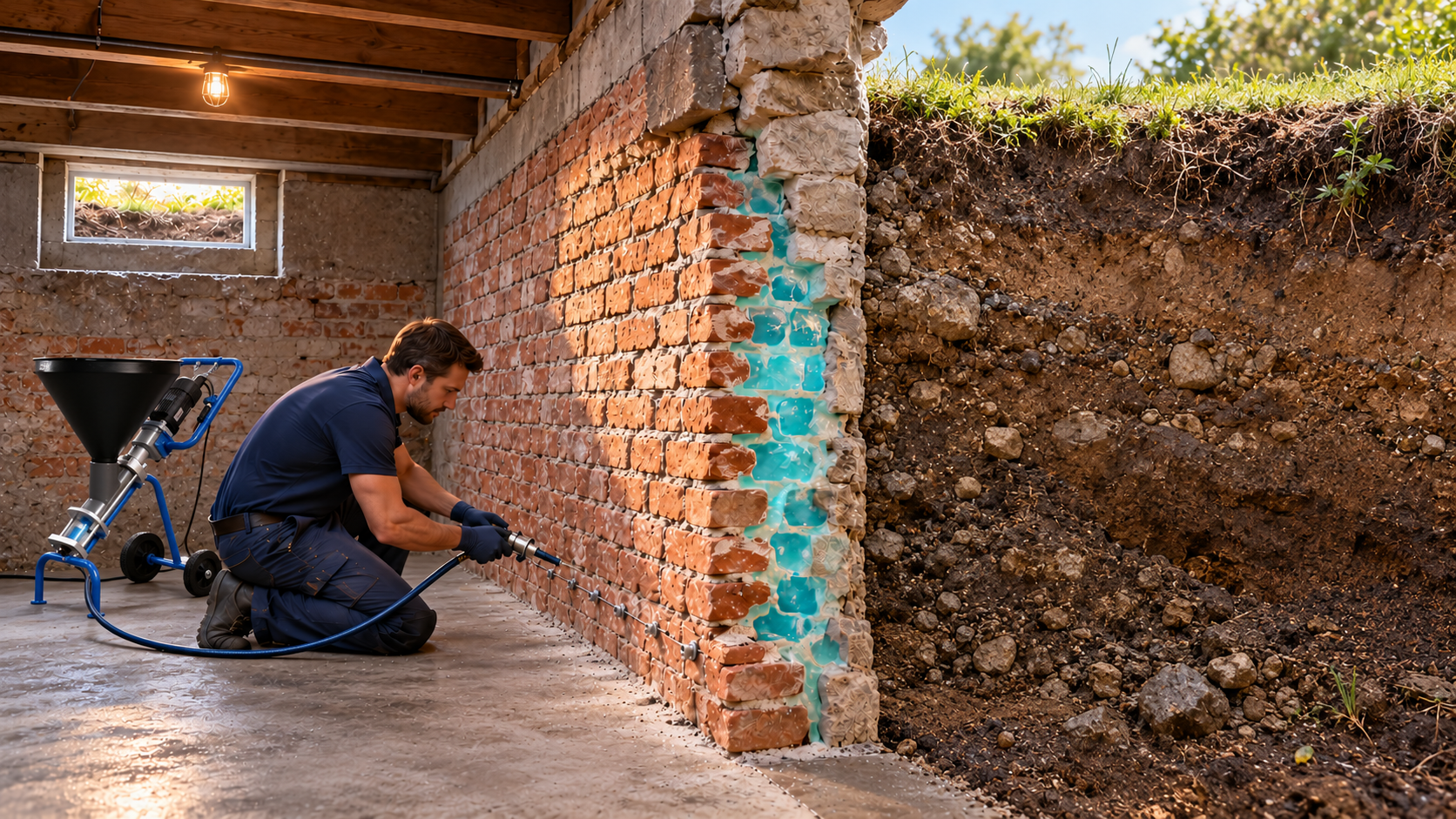
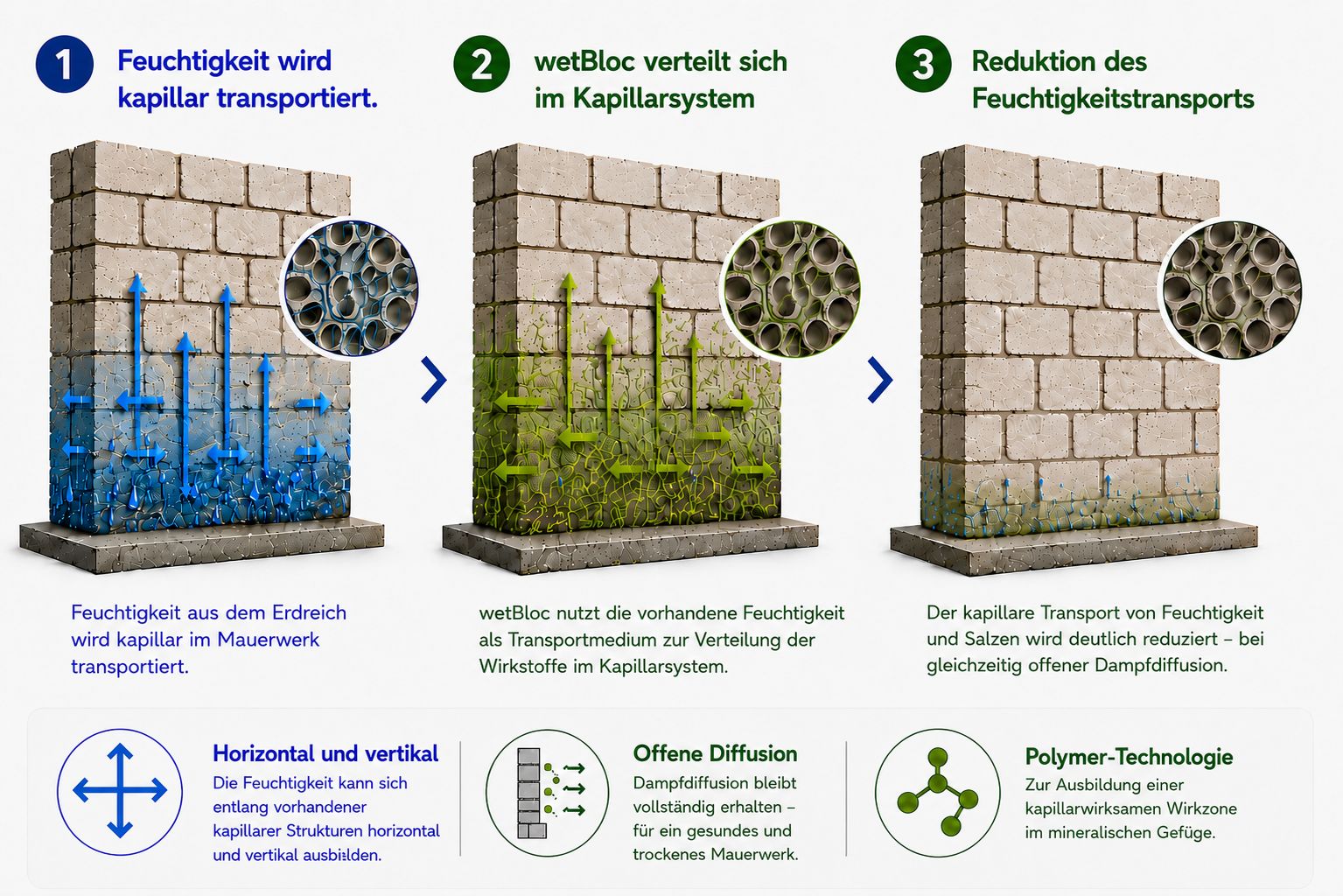
After application, wetBLOC spreads within the masonry's damp capillary system. The polymer-active components use existing moisture as a transport medium and penetrate the capillary structure.
There they react under controlled conditions and form a structurally integrated barrier zone within the pore system.
Formation of the capillary barrier structure
A targeted physical and chemical reaction of the polymer-active components takes place in the capillary system. This creates a continuous, capillary-effective barrier structure that adapts to the existing pore geometry.
This structure:
- •interrupts capillary water transport
- •reduces the transport of dissolved salts
- •remains permanently in the capillary system
Interruption of moisture and salt transport
Interrupting capillary action prevents further moisture from rising. Since salt transport is physically linked to moisture movement, it is stopped as well.
This gives the masonry the opportunity to dry gradually.
Water vapour diffusion is retained, preserving the building material's physical function.
Long-term stability
The polymer structure formed integrates permanently into the masonry's capillary system and remains there as a structurally bound, inactive reserve.
It is resistant to ageing and stable against hydrolysis and microbiological effects, and undergoes no relevant material degradation under normal building physics conditions. Its integration into the pore structure preserves its capillary-interrupting effect over the long term.
The system thus contributes to lasting protection against rising damp without substantially changing the mineral matrix or adversely affecting building physics properties such as vapour permeability and strength.
Reference projects and long-term applications demonstrate proven effectiveness over more than 20 years.
wetBLOC – stops rising damp from within.
Lasting. Sustainable. Effective.
3. Laboratory investigations and microscopic evidence
The scientific investigation clearly shows where wetBLOC acts in brick: within the material's active capillary and pore system, rather than on its surface.
Scientific investigations and material analysis evidence
Material investigations and reflected-light microscopic analyses by an independent specialist building materials testing institute in Germany confirm the structural integration of the polymer-based sealing material into the capillary and pore system of brick material.
As part of the investigations, brick fragments were taken from treated masonry and examined microscopically. Gel-like waterproofing structures formed within the brick's pore geometry were detected inside the capillary structure.
The micrographs show that the material is not merely deposited on the surface: it is present within the brick's pore system, where it forms an integrated structure.
Evidence of structural integration in the capillary system
The investigations demonstrate that the waterproofing material is present in capillary-active areas of the brick, where it forms a physically effective structure.
This structural integration is linked to the interruption of capillary moisture and salt transport within the brick material and confirms wetBLOC's material-level mechanism within the building material's capillary system.
Significance for practical application
The microscopic evidence shows that wetBLOC acts in the brick's capillary system — where rising damp is physically transported.
Integration into the capillary structure creates a lasting structure that influences the capillary transport mechanism and provides the conditions for drying and long-term protection of the building fabric.
Detailed microscopic evidence in a brick treated with wetBLOC
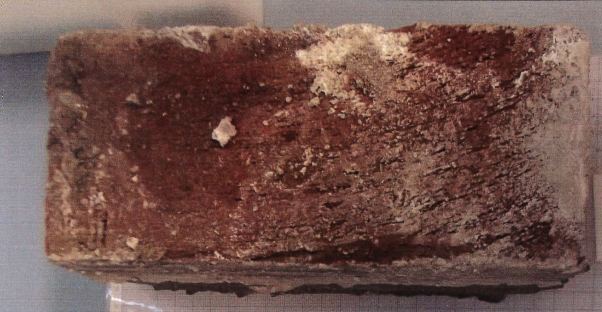
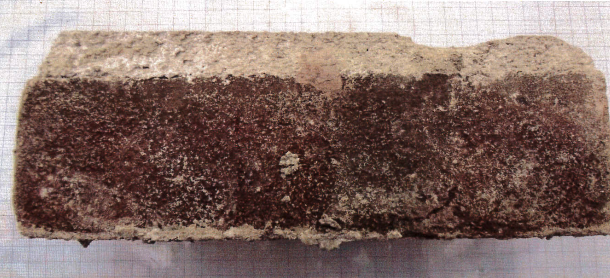
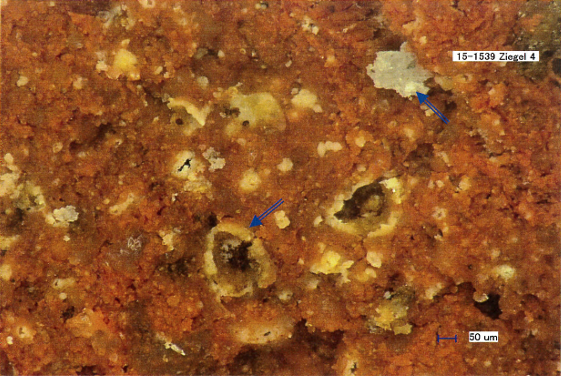
The following reflected-light micrograph shows a brick fragment from a masonry area treated with wetBLOC above the waterproofing level. The mineral pore structure and its capillaries are visible; in untreated material, these serve as transport paths for moisture and dissolved salts.
Gel-like structures formed in the pore system in connection with the wetBLOC treatment are visible within this capillary structure. They are located in the capillary areas and are associated with influencing capillary moisture and salt transport.
The micrograph thus shows the structural integration of the sealing material formed during wetBLOC treatment into the capillary system of the mineral building material.
4. Chemical and technical operation in detail
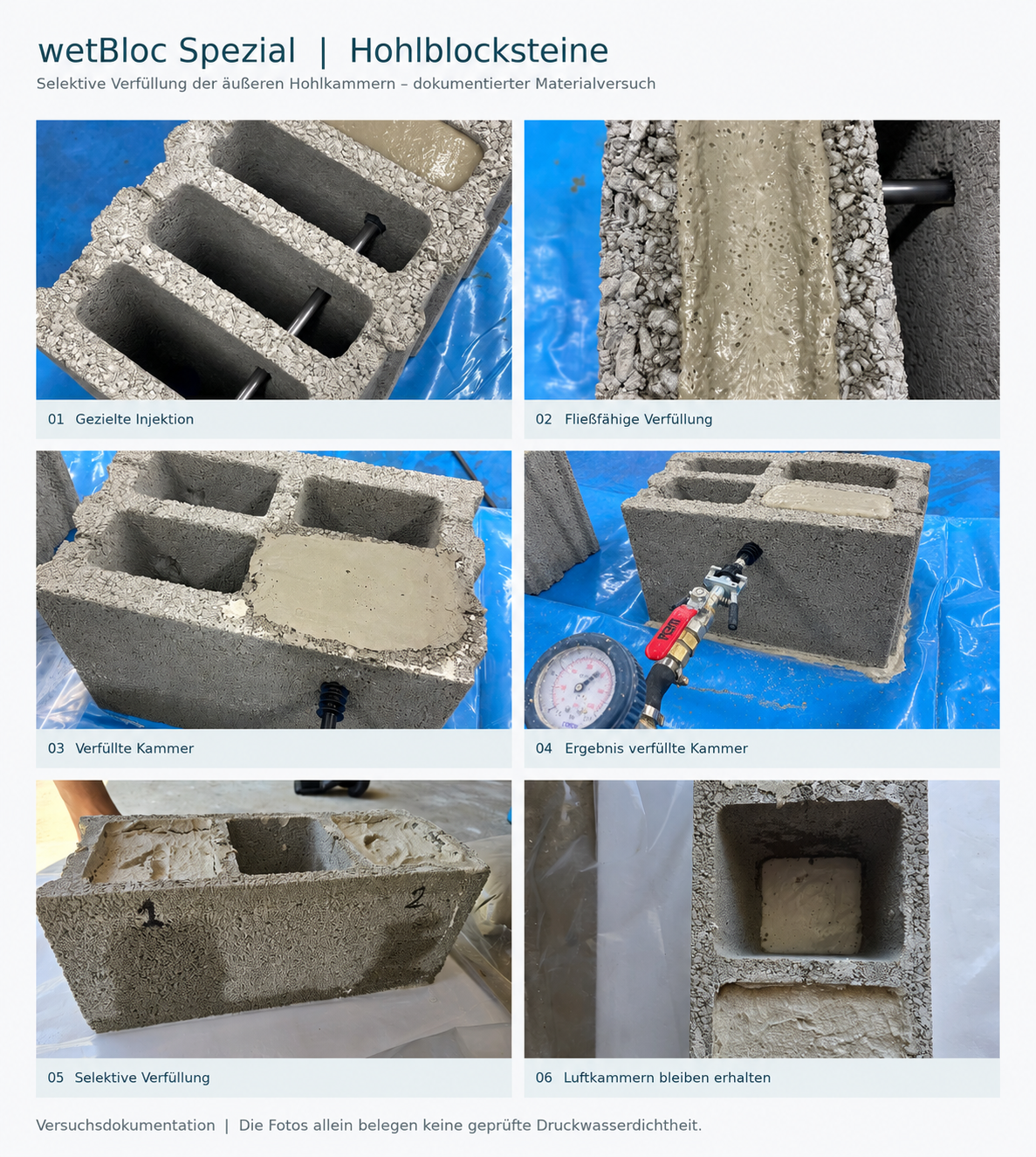
wetBLOC is based on a polymer-active system that reacts specifically with the moisture present in masonry. The technology uses physical capillary transport mechanisms to integrate the active components into the pore and capillary system and form a permanent structure there.
Injection & capillary distribution
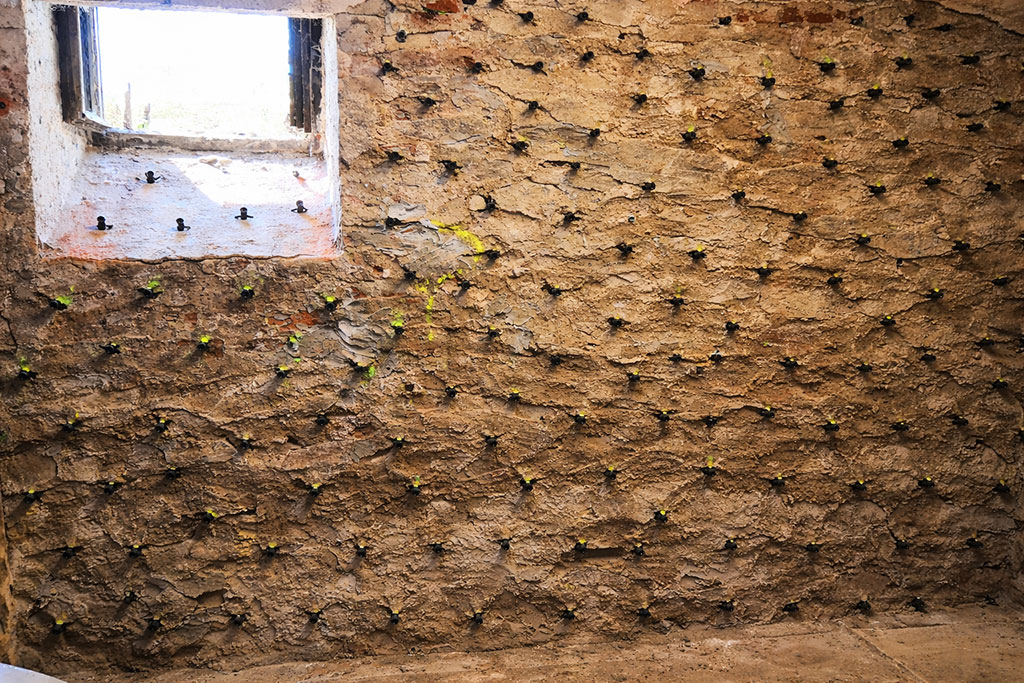
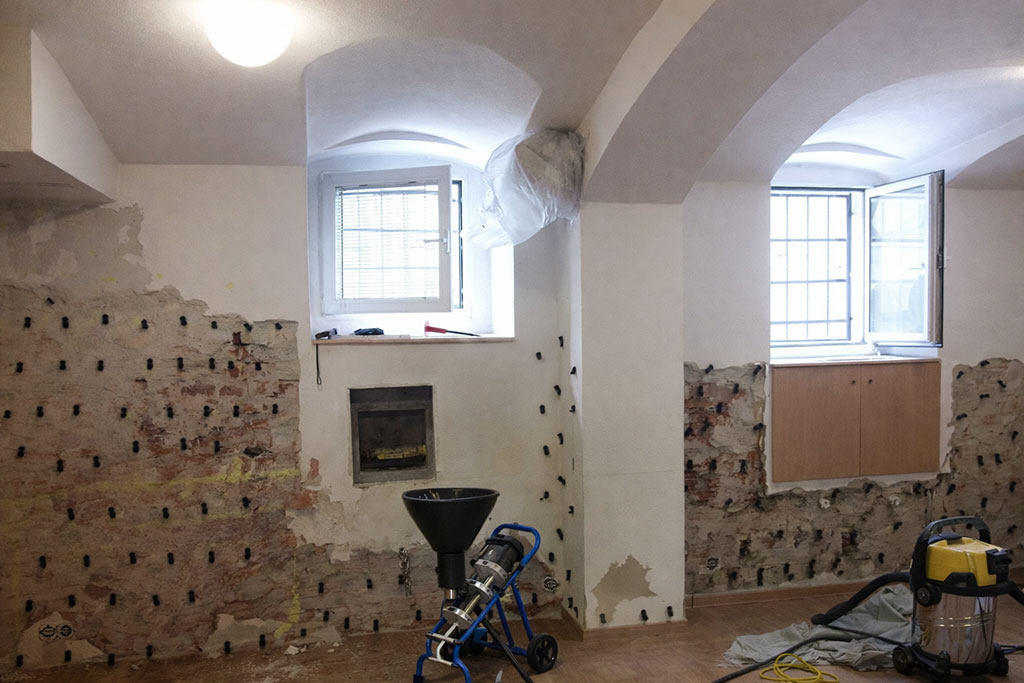
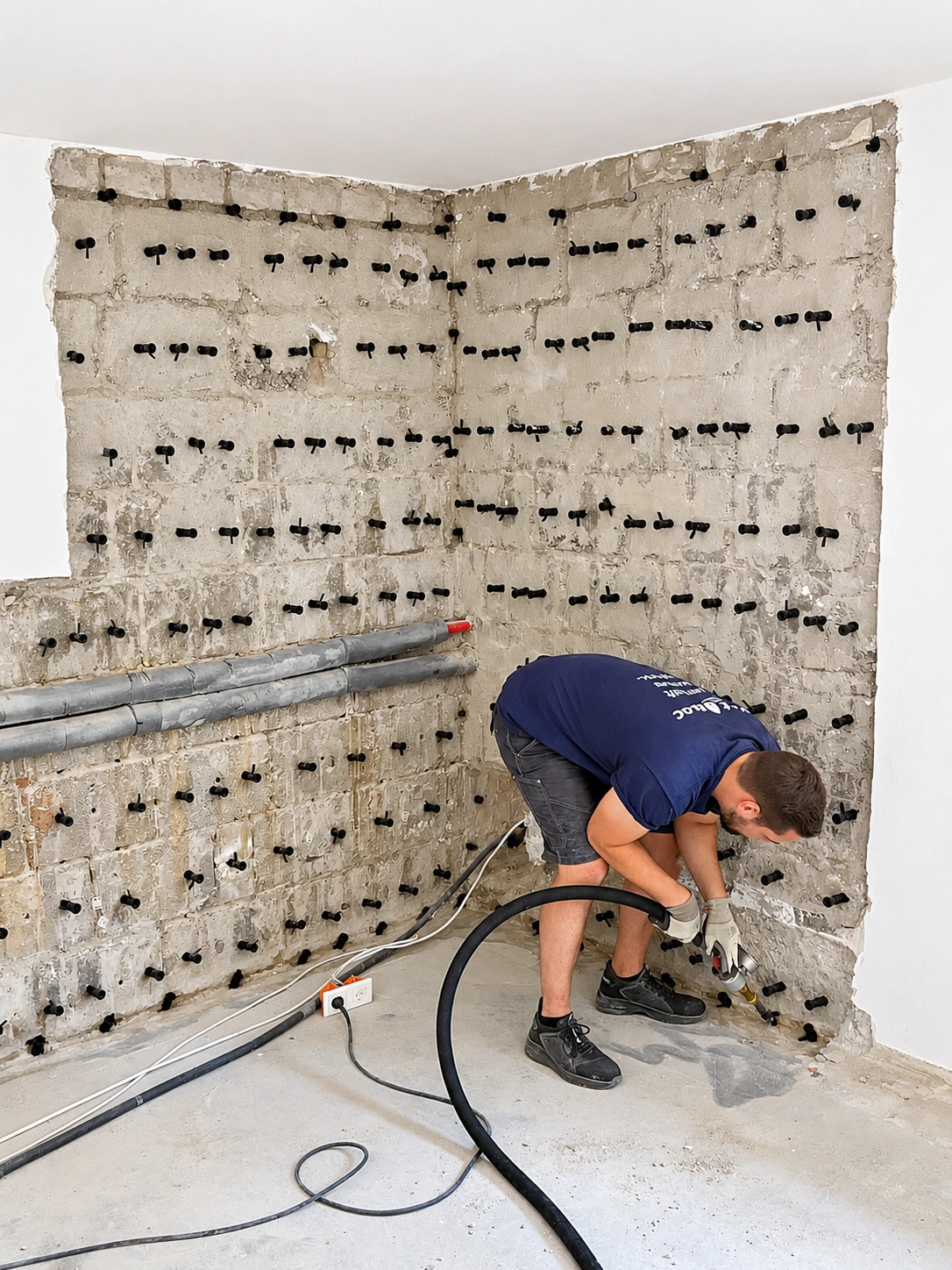
After injection, the polymer-active components spread independently through the masonry's damp capillary system. Existing moisture acts as the transport medium and enables uniform distribution through the pore system.
Swelling and cross-linking reaction
Within the capillary system, the polymer-active components react with the existing moisture. Swelling and molecular crosslinking create a stable structure that integrates directly into the pore geometry.
Capillary waterproofing while maintaining vapour permeability
The resulting structure interrupts capillary water transport in masonry. Water vapour diffusion is retained, preserving the building material's physical function.
Long-term stability
The integrated polymer structure remains permanently in the masonry's capillary system. It resists ageing and ensures long-term protection against rising damp.
Scientific advantages
Molecular integration
Chemical and physical integration into the masonry's pore structure — an adaptive sealing zone rather than a rigid or brittle barrier layer.
Selective action
Blocks water transported by capillary action while still allowing water vapour diffusion – for balanced moisture management over the long term.
pH-neutral & salt-resistant
No harmful interaction with mineral building materials. Resistant to sulphates and other salts typically found in masonry.
Works in all directions
Capillary-guided distribution with a 360° effect — effective horizontally, vertically and diagonally.
Scientifically tested
wetBLOC was tested in accordance with recognised DIN EN ISO standards and WTA technical bulletins investigated in terms of building physics. The tests demonstrate significantly reduced capillary water absorption and altered moisture characteristics in the masonry. A safety data sheet in accordance with Regulation (EU) 2020/878 is available.