 ®















Innovative waterproofing technology
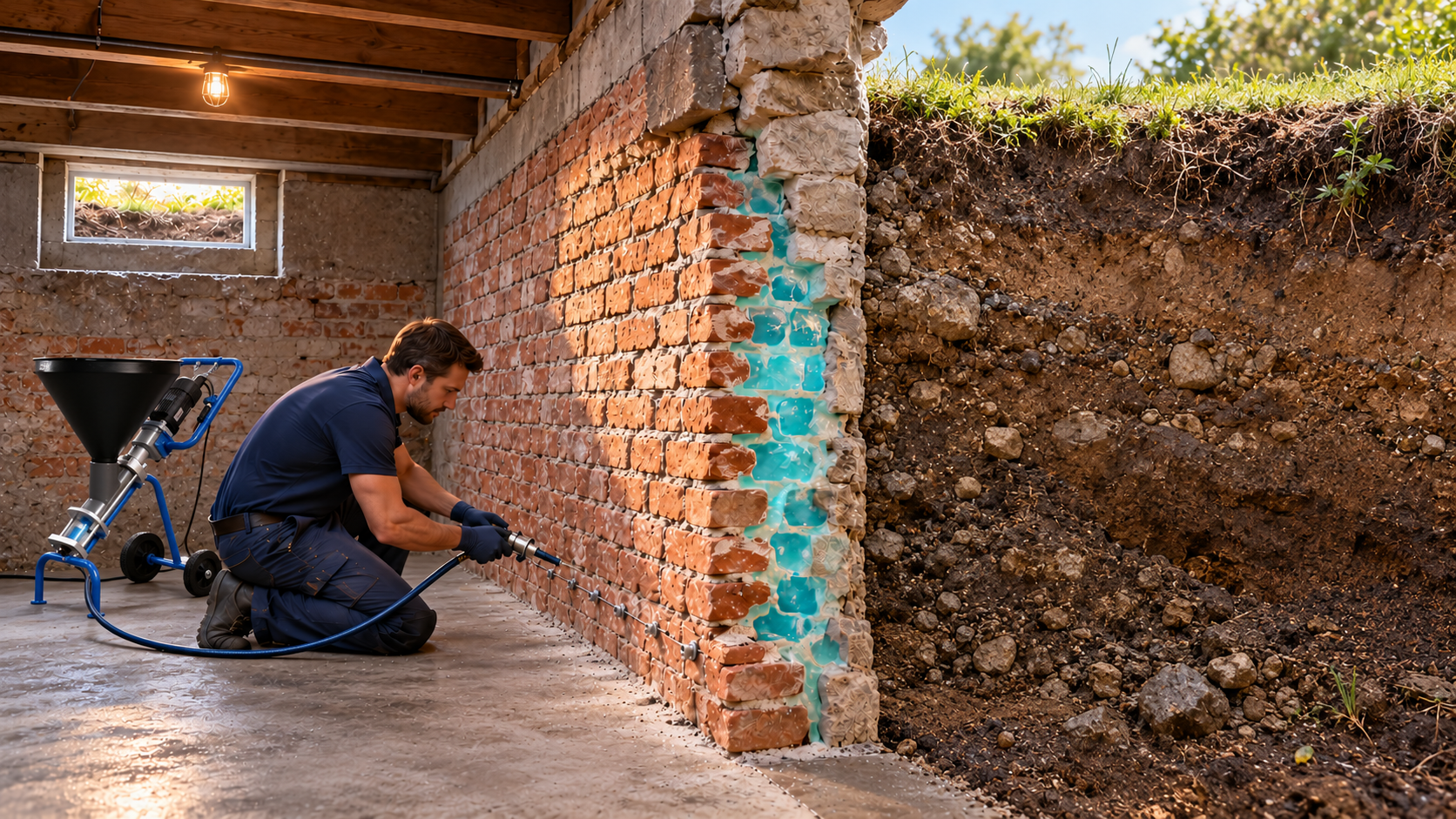
wetBLOC is based on a development in polymer science for the targeted use of capillary moisture in mineral building materials. The technology was developed specifically for damp masonry structures and combines materials science with the building physics requirements of existing-building remediation.
Unlike conventional waterproofing methods, wetBLOC actively uses the moisture present in masonry as a transport and action medium. This makes the technology particularly suitable for heavily saturated buildings where conventional systems often reach physical limits.
After introduction, the polymer-active material spreads independently along capillary moisture pathways – both horizontally and vertically – through the building material's pore system. A controlled swelling and cross-linking reaction creates a continuous capillary waterproofing zone within the capillaries. This reliably stops further water transport without forming a rigid or brittle barrier layer. The masonry remains permeable to water vapour, allowing natural drying to continue.
Application in six steps
Hygienic pretreatment
Before waterproofing begins, the wall is treated with the disinfectant Derotin. This reduces mould spores and microbiological contamination.
Injection
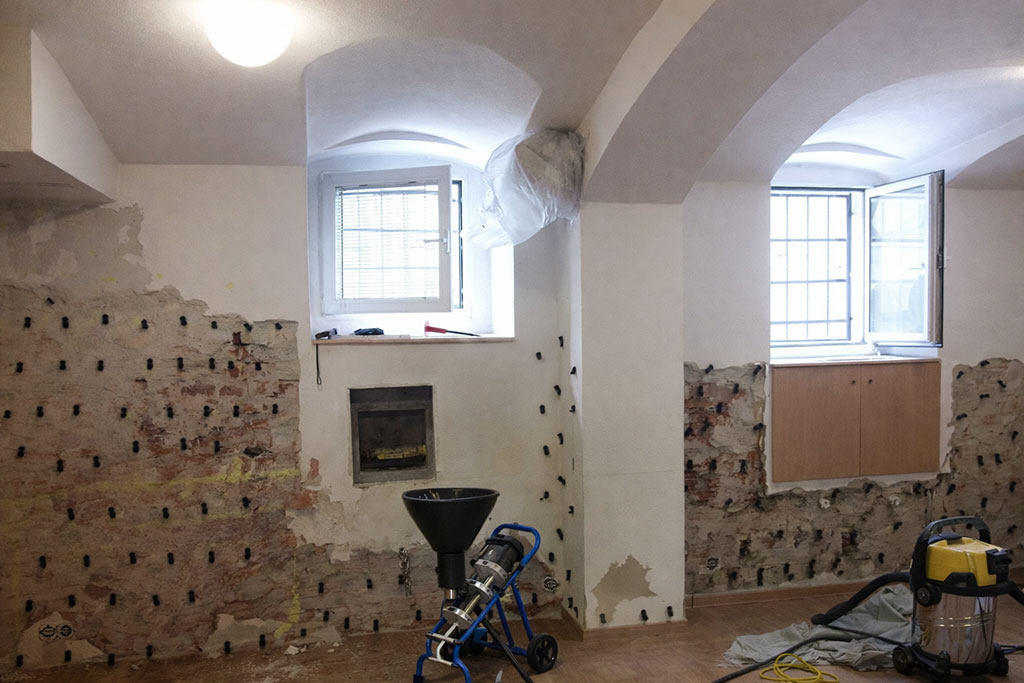
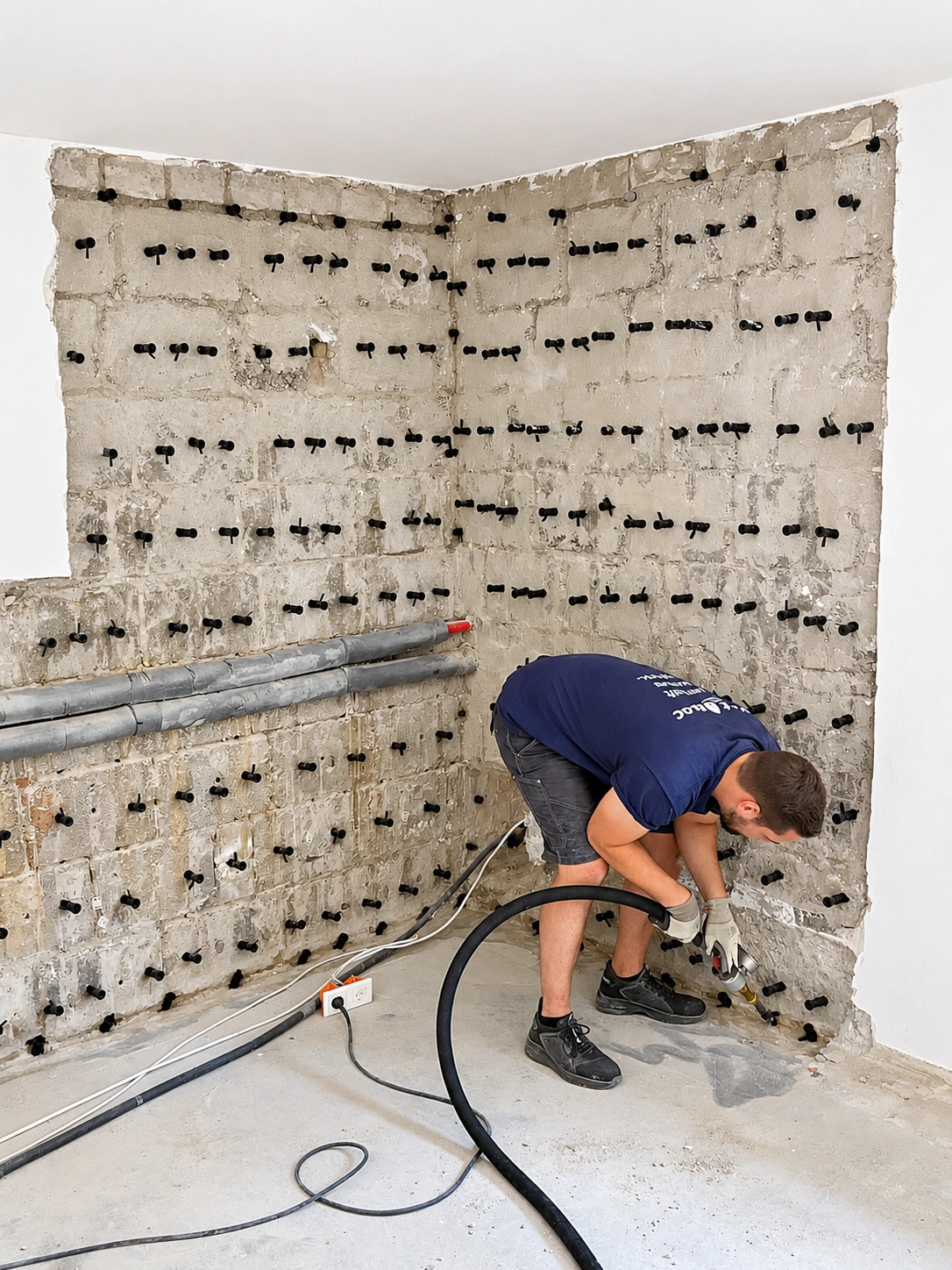
The wetBLOC system is introduced precisely into damp masonry using special injection packers. Application is tailored to the material and building substrate.
Capillary distribution
wetBLOC uses the moisture present in the building fabric as a transport medium and spreads independently along capillary moisture pathways.
Reaction and formation of sealing zones
A controlled swelling and cross-linking reaction takes place in the masonry, creating a capillary waterproofing zone.
Lasting protection
The masonry receives long-term protection against rising damp and lateral moisture ingress while remaining permeable to water vapour.
Restoration plaster systems
Once waterproofing is complete, a suitable restoration plaster system is applied to protect the surface and improve its appearance.
Technical properties
The unique benefits of the wetBLOC system at a glance
Works in all directions
Works horizontally and vertically in masonry and is suitable for both rising damp and lateral moisture ingress.
Capillary sealing
A continuous capillary-sealing zone forms within the pore system, reliably stopping water transport.
Vapour-permeable
The waterproofing zone remains permeable to water vapour, allowing the masonry to retain its building physics functions.
Lasting effectiveness
The polymerised sealing zone is stable over the long term and resistant to ageing. wetBLOC and EPASIT provide a voluntary 15-year system warranty for the agreed waterproofing work. Conditions include approved EPASIT products, professional application in accordance with technical guidelines and complete documentation.
Salt-resistant
The waterproofing remains functional in the presence of sulphates and other salts typically found in masonry.
Efficient application
Targeted injection by trained specialist partners enables fast implementation with limited structural intervention.
CHEMICAL AND TECHNICAL BASIS
wetBLOC is based on polymer-active technology. Within the masonry, the swellable polymer forms a capillary-sealing structure that limits moisture transport.
The detailed mechanism is explained on the page Operating principle explained.
Applications
Vaults & arches
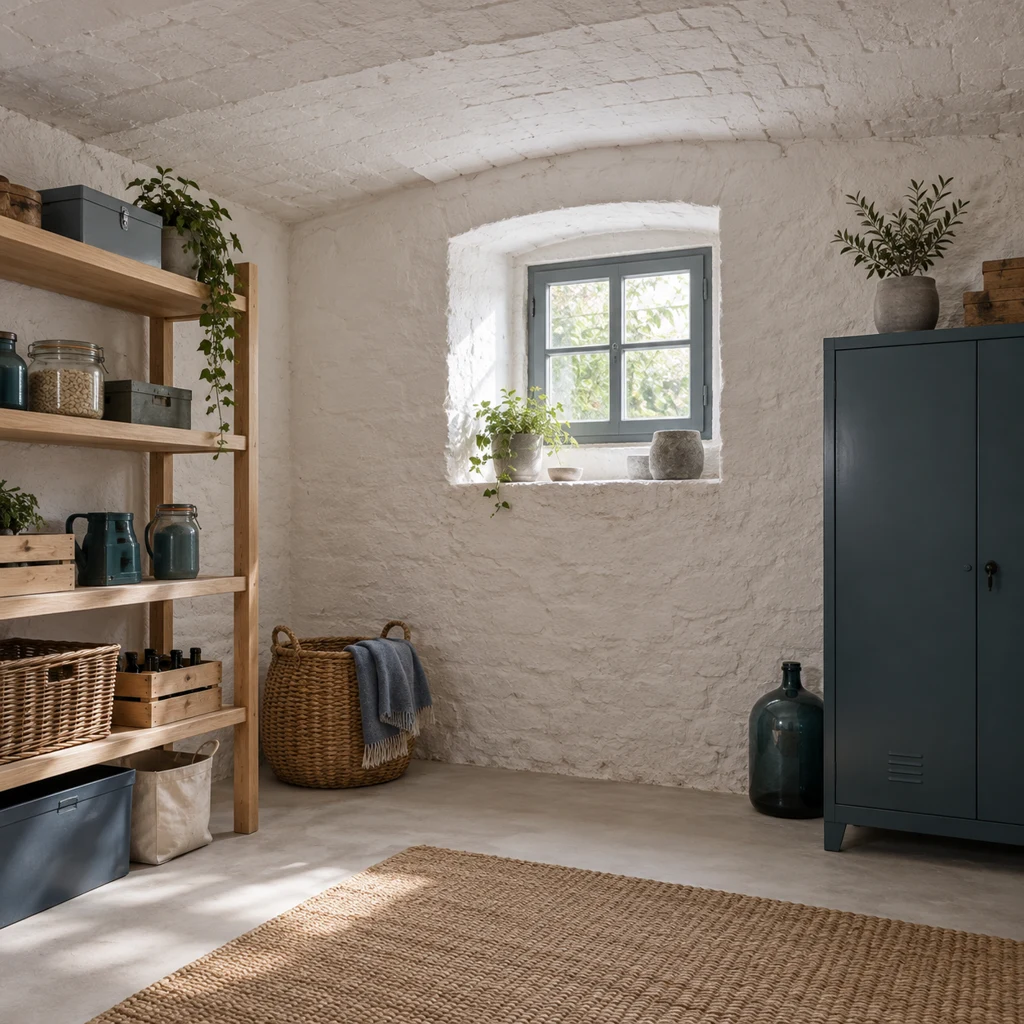
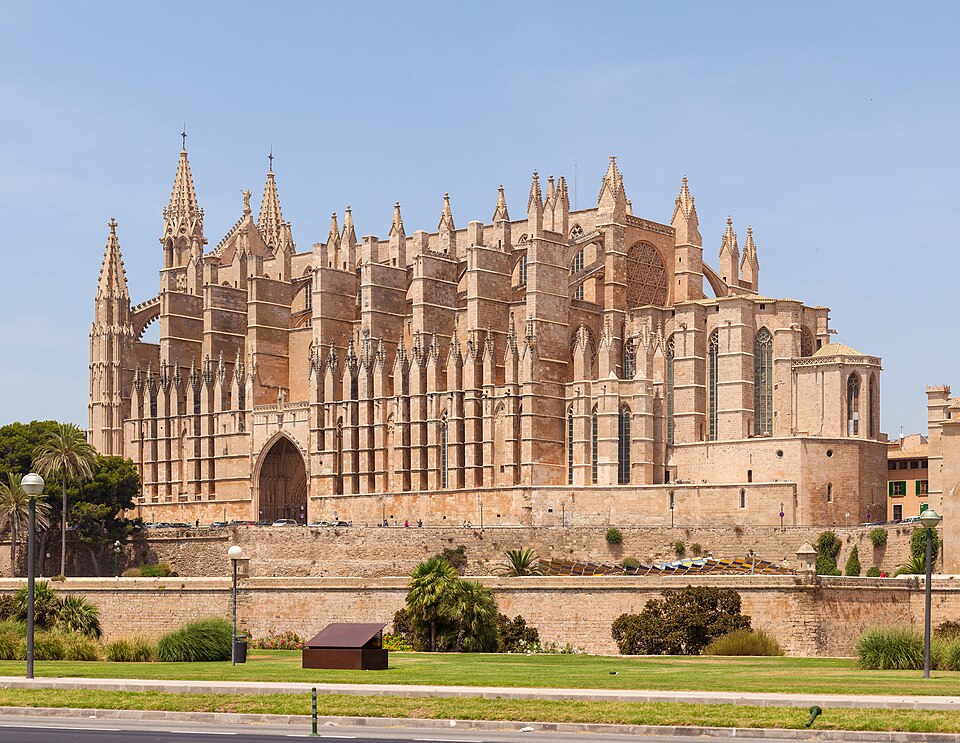
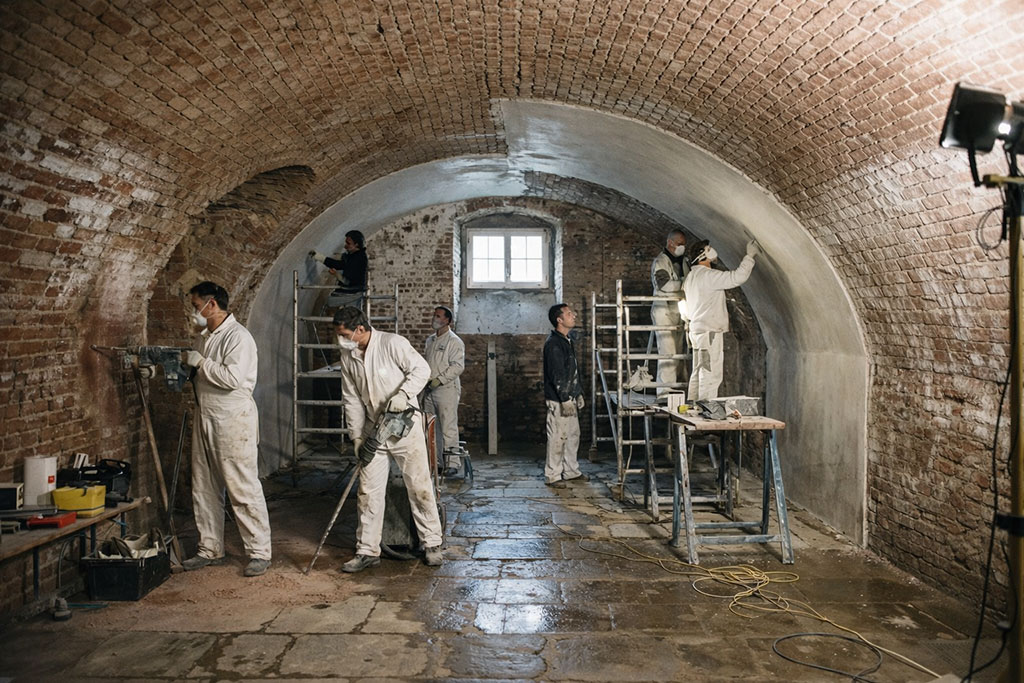
Tailored wetBLOC waterproofing solutions for historic vaults, arches and complex masonry structures.
Listed buildings
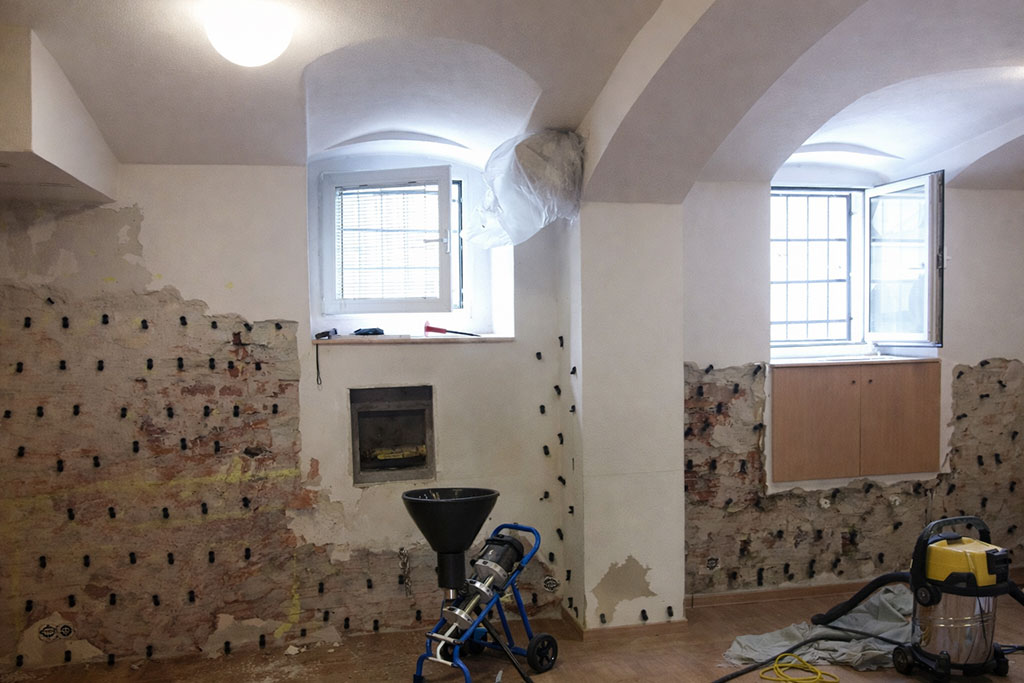
Masonry waterproofing that preserves the building fabric of historic and listed buildings, with minimal structural intervention.
Basements & lower ground floors
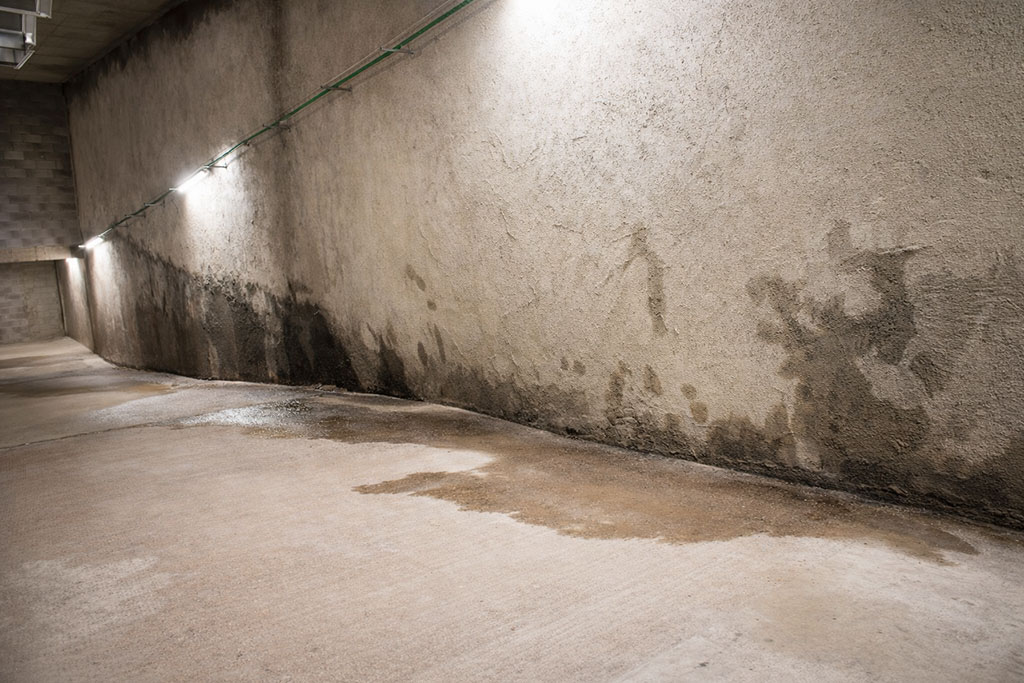
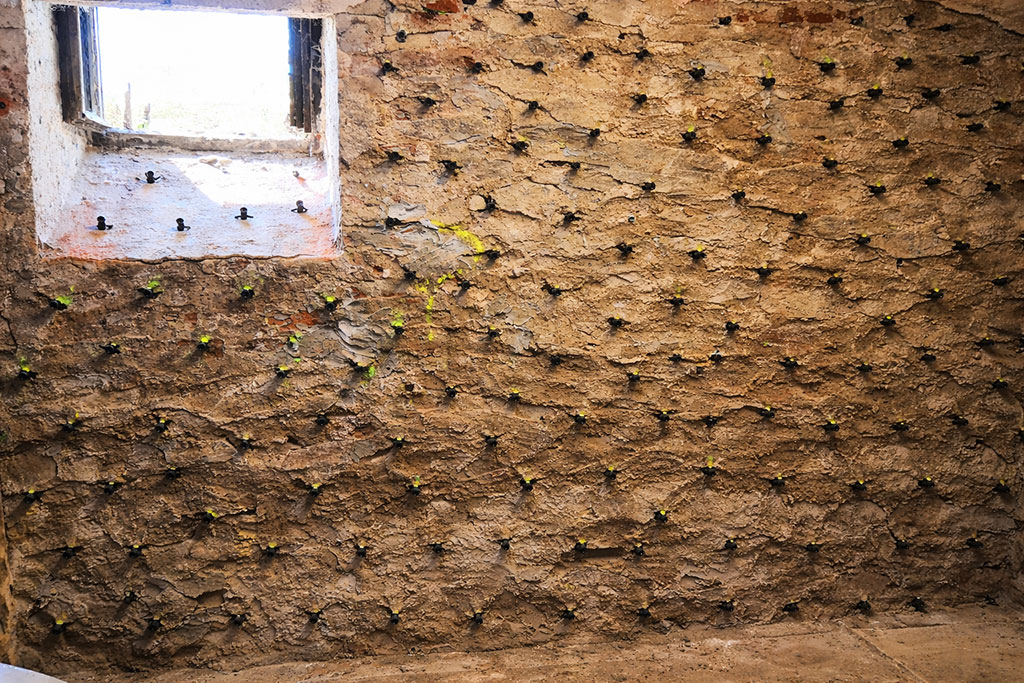
Comprehensive renovation concept with retrofitted horizontal and vertical masonry waterproofing against rising damp and lateral moisture ingress.
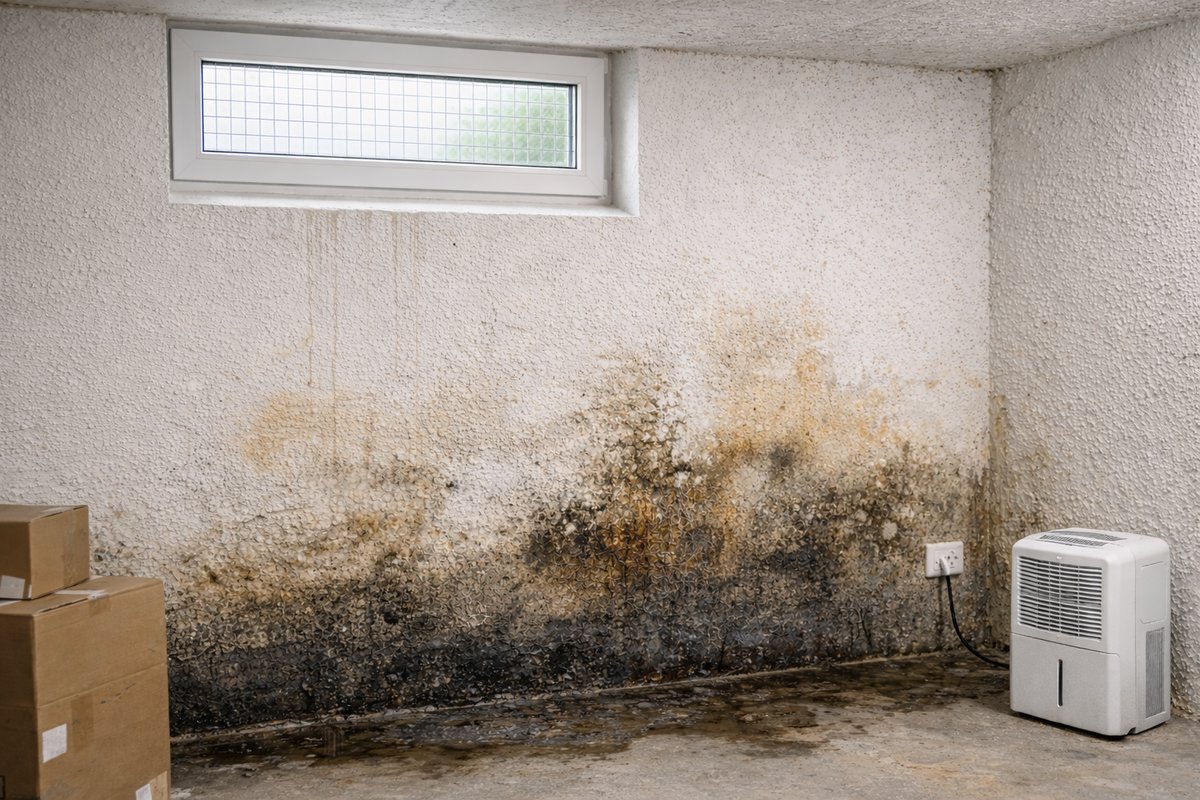
External walls
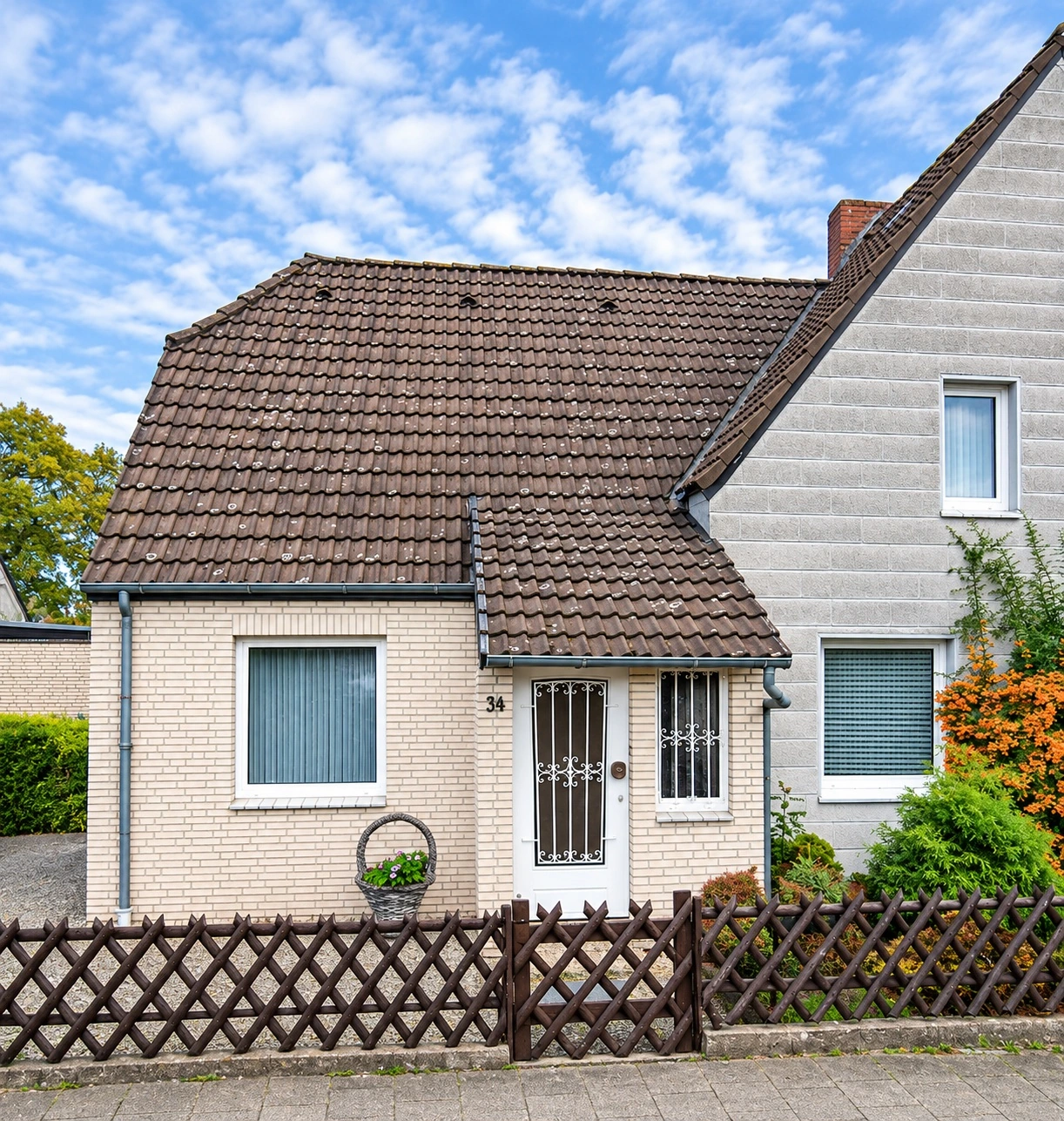
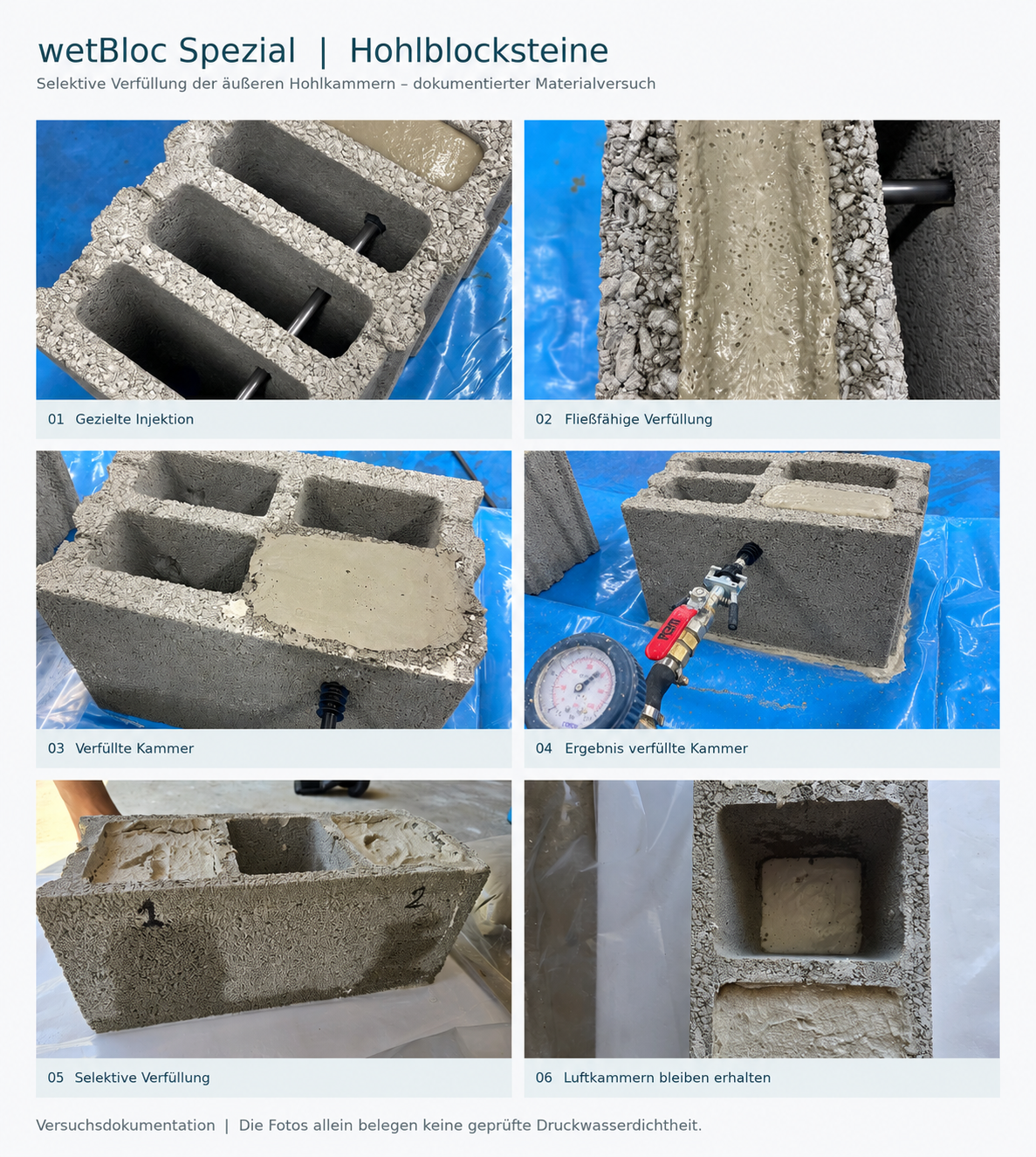
Retrofitted vertical masonry waterproofing against lateral moisture ingress. Suitable for almost all masonry types, including hollow blocks.
Advantages over conventional systems
System comparison: waterproofing methods at a glance by key criteria
| Criterion | wetBLOC | Wall sawing method | Injection resins | Water-repellent treatment |
|---|---|---|---|---|
| Impact on structural stability | ✓ Minimal | ✗ High | ○ Medium | ✓ Minimal |
| Performance at high moisture saturation | ✓ Very good | ✓ Good | ○ Conditional | ✗ Low |
| Salt resistance | ✓ High | ✓ High | ○ Medium | ○ Medium |
| Vapour permeability | ✓ Yes | ✓ Yes | ✗ No | ✓ Yes |
| Direction of effect | ✓ 360° | ○ Horizontal | ○ Limited | ○ Limited |
| Warranty* | ✓ 15 years | ○ Variable | ○ Variable | ○ Variable |
Subject to professional planning and execution by trained wetBLOC specialists in accordance with the applicable warranty conditions.
The table compares the key differences between waterproofing systems in terms of structural intervention, mechanism and potential risks. As a minimally invasive injection system, wetBLOC is particularly suitable for existing buildings with complex masonry structures and demanding remediation conditions.
Additional criteria relevant to planning, insurance and heritage conservation
| Criterion | wetBLOC | Wall sawing | Injection resins | Water-repellent treatment |
|---|---|---|---|---|
| Compatibility with heritage conservation | ✓ High | ✗ Low | ○ Medium | ✓ High |
| Environmental compatibility | ✓ Very good | ○ Medium | ✗ Low | ✓ Good |
| Time on site | ✓ Short | ✗ Long | ○ Medium | ✓ Short |
| Reversibility | ○ Conditional | ✗ No | ✗ No | ○ Conditional |
| Preserving the building fabric | ✓ Very good | ✗ Low | ✓ Good | ✓ Good |
Classification:
These criteria are particularly relevant when renovating existing buildings. wetBLOC's swellable polymer structure offers advantages in highly damp masonry and in waterproofing that preserves the building fabric. The system forms a capillary waterproofing zone within the masonry rather than a rigid barrier layer.
Distinction from other waterproofing methods
General classification
Mechanical, chemical and electrophysical methods are used for retrofitted masonry waterproofing against capillary rising damp and lateral moisture ingress. They differ in their operating principles, the building work required and their suitability for different masonry types and moisture exposures.
wetBLOC is a polymer-based capillary waterproofing injection system. It uses existing masonry moisture as a transport medium, spreads along capillary moisture pathways and swells to form a permanent waterproofing zone adapted to the pore structure.
Combined with the coordinated renovation plaster system, this creates a comprehensive remediation plan that combines masonry waterproofing with vapour-permeable surface restoration and supports subsequent drying.
Water-repellent
medium
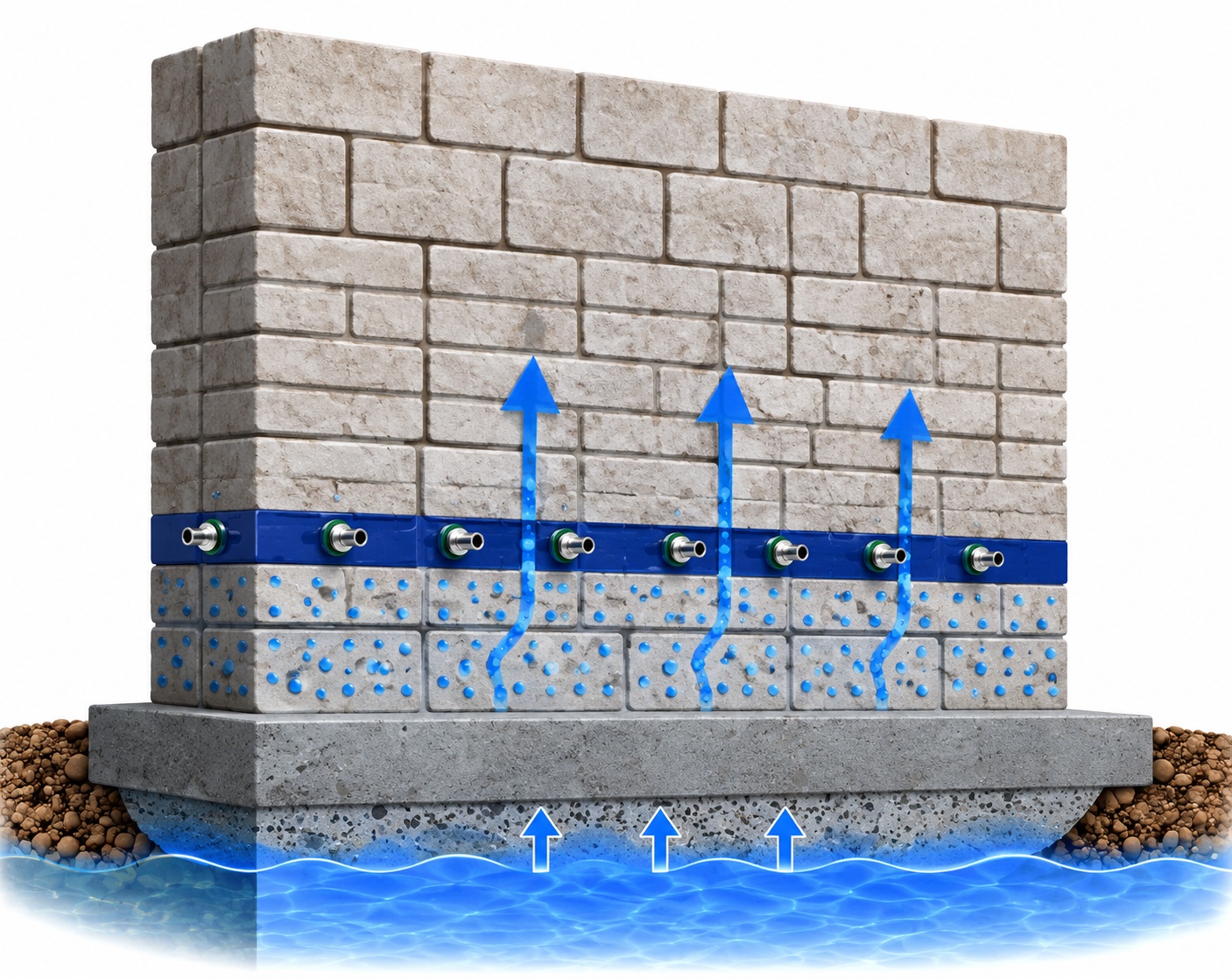
Conventional water-repellent injection methods, for example based on silane or siloxane, make pore and capillary surfaces water-repellent. Their effectiveness depends on sufficient distribution of the active substance in the masonry. They do not form a swellable waterproofing structure and cannot independently seal cracks that develop later.
Incomplete waterproofing carries the risk that moisture will continue to travel through untreated areas or adjoining building elements, causing renewed damp damage above the horizontal barrier. These methods are mainly used to install horizontal barriers retrospectively.
Possible limitations:
- Effectiveness depends on complete distribution of the active substance
- No independent sealing of cracks that develop later
- Possible moisture transport through untreated areas or adjoining building elements
- Renewed damp damage above the horizontal barrier if moisture bypasses it
- Mainly used for installing horizontal barriers in existing buildings
How wetBLOC differs:
Unlike conventional water-repellent treatments, wetBLOC forms a swellable polymer structure within the pore and capillary system. This creates a capillary-sealing active zone that limits moisture transport while continuing to allow water vapour diffusion. The polymer system is designed for long-term activity.
Injection resins – waterproofing through curing
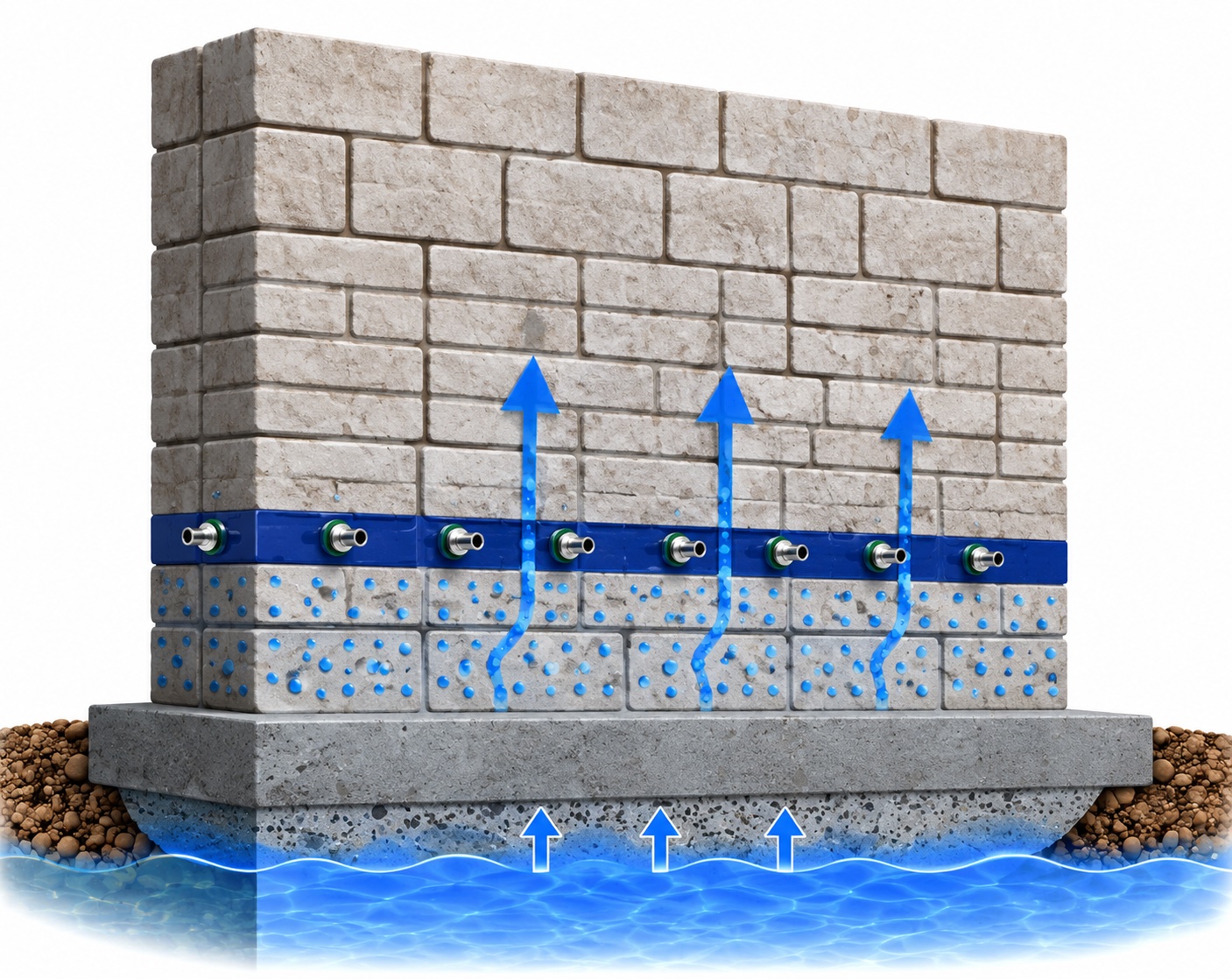
Injection resins, for example epoxy- or polyurethane-based, are introduced as liquids into cracks, joints or cavities. They cure through a chemical reaction and form rigid or elastic waterproofing structures depending on the material. Their effectiveness depends on adequate filling and structural conditions.
Possible limitations:
- Sometimes high injection pressures, with risks to damaged masonry
- Limited accommodation of building movement, depending on resin type
- No autonomous redistribution after full curing
- Distribution is more difficult in heterogeneous masonry or masonry with large voids
- No general ability to independently seal cracks that develop later
How wetBLOC differs:
wetBLOC is applied at low pressure, spreads within the pore system and retains its swelling capacity. This allows its effect to adapt to changing moisture distributions.
Other waterproofing methods compared
Mechanical methods – waterproofing using physical barrier layers
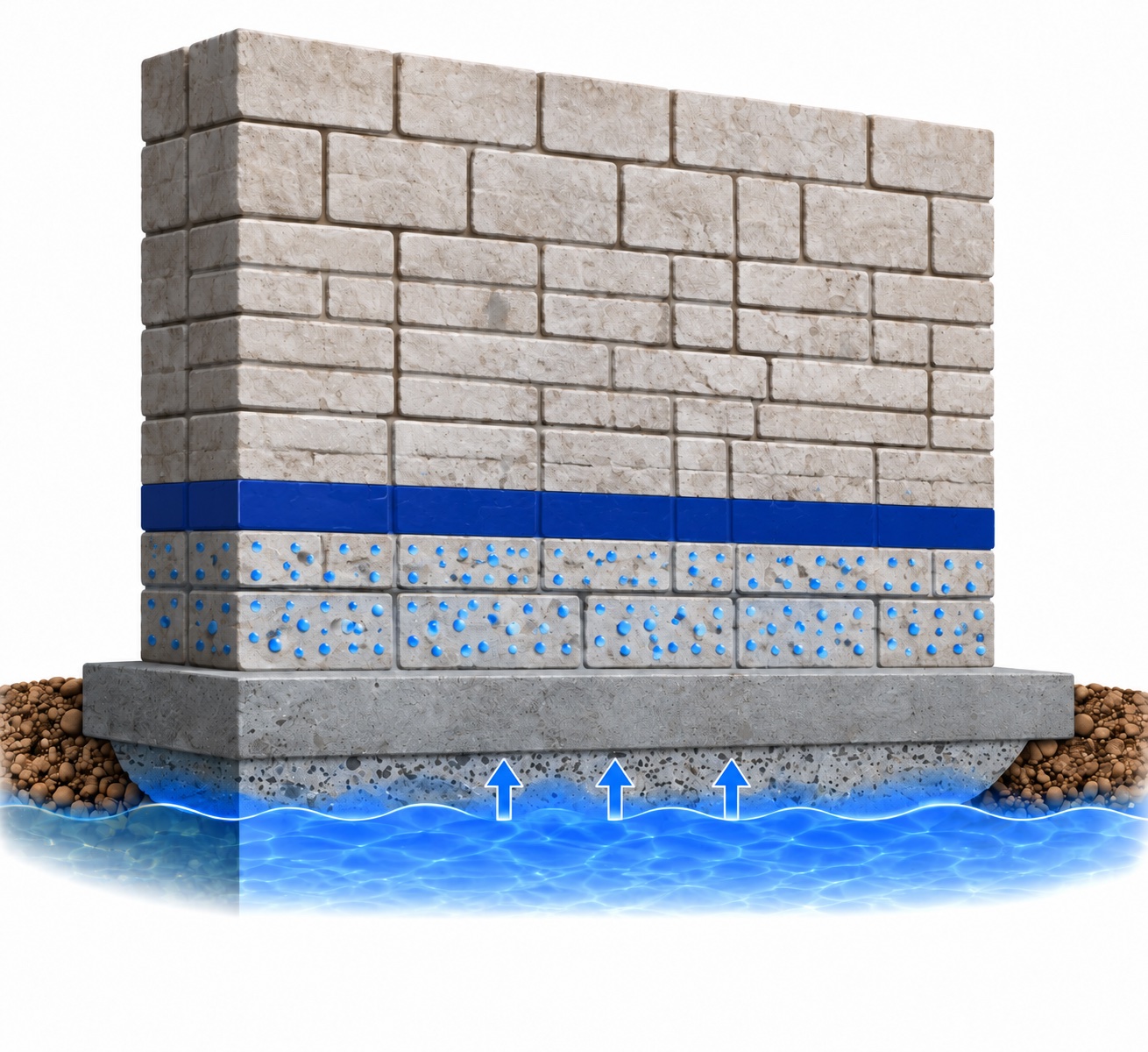
Mechanical methods such as wall sawing, masonry replacement or sheet driving interrupt capillary moisture transport by installing an impermeable barrier layer across the masonry cross-section. This requires direct intervention in the existing building fabric.
Possible limitations:
- Intervention in the building fabric with possible structural risks
- Extensive building work and technical effort
- Vibrations and possible cracking, depending on the method
- Limited suitability for heterogeneous masonry and historic buildings
- Predominantly horizontal waterproofing, no solution for lateral moisture ingress
How wetBLOC differs:
wetBLOC requires no structural intervention and is introduced through drill holes with minimal disruption. This makes it particularly suitable for sensitive existing buildings.
Electrophysical methods – influencing moisture transport
Electrophysical methods aim to influence moisture transport in masonry through electrical or electromagnetic effects. Unlike material-based waterproofing methods, they do not form a physical barrier or a capillary-sealing structure within the masonry. Effectiveness must be assessed differently depending on the method and has not been sufficiently demonstrated scientifically for all systems.
Possible limitations:
- Effectiveness depends on the method used and building conditions
- Missing or insufficient scientific evidence of effectiveness for certain systems
- No material waterproofing of the pore and capillary structure
- No independent waterproofing against lateral water ingress
- Active systems depend on a power supply and functioning equipment
How wetBLOC differs:
wetBLOC is based on a scientifically investigated and field-tested operating principle. The swellable polymer forms a capillary waterproofing structure in masonry, whose formation has been demonstrated by laboratory investigations. The waterproofing effect is supported by many years of practical experience and operates independently of electricity or electronic components.
wetBLOC is also suitable for heavily saturated masonry. Masonry condition, the cause of moisture and structural circumstances are decisive for successful application.
Technical application limits of wetBLOC
wetBLOC is not suitable for:
- Watertight concrete structures (e.g. a “white tank”)
- Leaking wall-to-floor junctions that require independent structural waterproofing
- Significant structural damage or construction defects that must first be remedied
Suitability and any necessary additional remediation measures are assessed for each property.